Santorini Greece Earthquakes: A Comprehensive Guide To Understanding Seismic Activity - Buildings in Santorini are constructed according to strict seismic building codes, ensuring they can withstand moderate to severe earthquakes. Modern infrastructure incorporates advanced engineering techniques to enhance resilience against seismic forces. Recent studies have highlighted the importance of monitoring volcanic activity as an indicator of potential seismic events. The interplay between volcanic eruptions and earthquakes is a focal point of research, offering new perspectives on the island's geological dynamics.
Buildings in Santorini are constructed according to strict seismic building codes, ensuring they can withstand moderate to severe earthquakes. Modern infrastructure incorporates advanced engineering techniques to enhance resilience against seismic forces.
Publications from the Nature Journal and other reputable sources underscore the significance of interdisciplinary research in understanding Santorini's seismic activity.
By following these precautions, tourists can enjoy their visit to Santorini with peace of mind, knowing they are prepared for any seismic eventuality.
For tourists visiting Santorini, understanding what to do during an earthquake is crucial for ensuring personal safety. Simple precautions can make a significant difference in minimizing the risk of injury or harm.
Santorini is divided into several sub-seismic zones, each with varying levels of seismic activity. Understanding these zones is essential for effective disaster management and urban planning.
Data from the European-Mediterranean Seismological Centre (EMSC) provides valuable insights into the seismic behavior of these zones, helping scientists predict potential earthquake patterns.
Greece declares state of emergency on Santorini after earthquakes
Ongoing scientific research on Santorini Greece earthquakes provides valuable insights into the island's seismic behavior. Researchers from around the world collaborate to study the tectonic processes and develop strategies for mitigating the impact of earthquakes.
The impact of earthquakes on Santorini's landscape serves as a reminder of the dynamic nature of geological processes and the island's vulnerability to seismic activity.
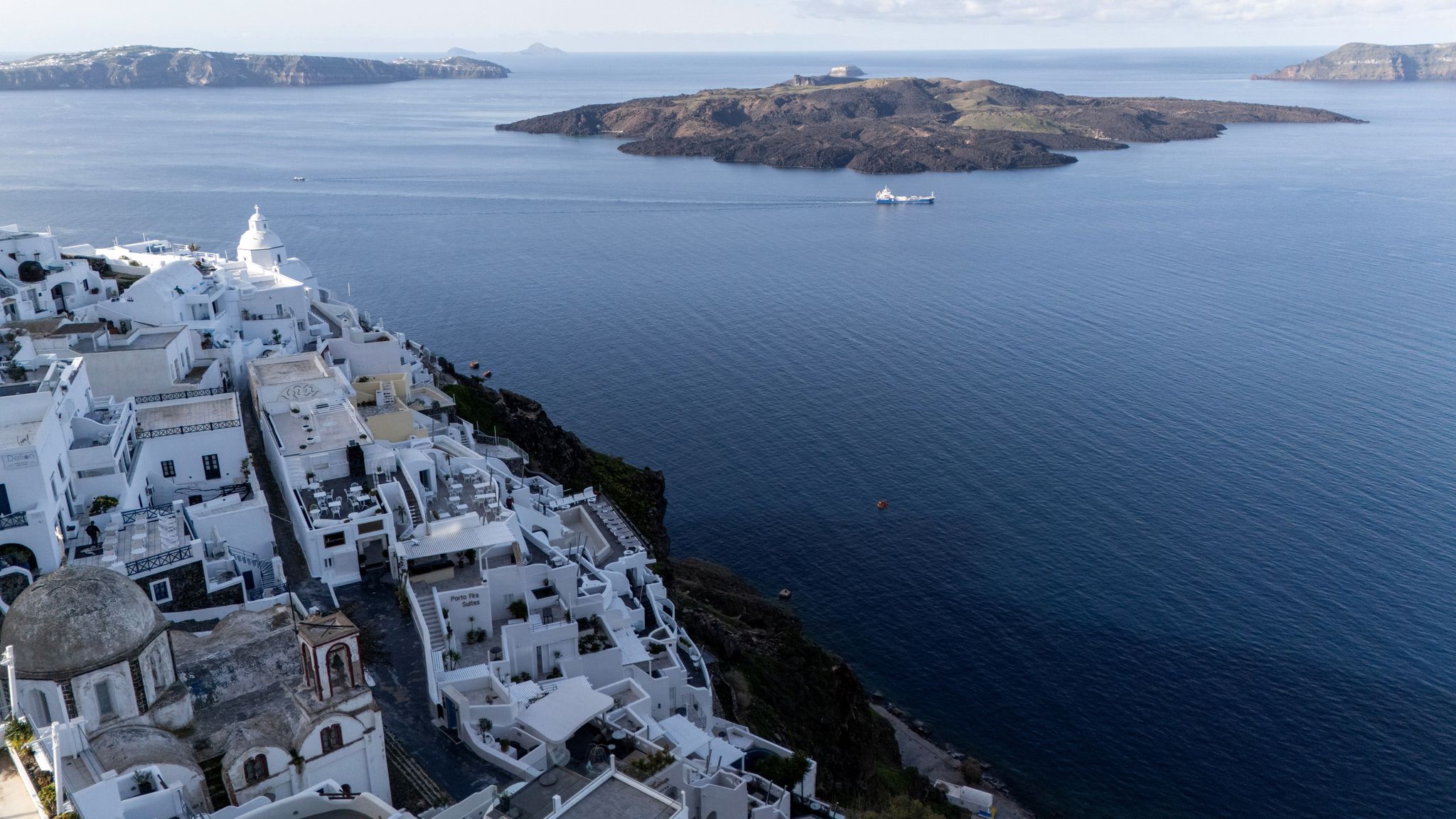
Santorini Greece earthquakes are a natural phenomenon that has shaped the island's history and geography. By understanding the causes, impacts, and safety measures associated with these seismic events, residents and visitors can better prepare for potential future occurrences.
The volcanic activity in Santorini is a result of the subduction zone where the African Plate converges with the Eurasian Plate. This tectonic movement is responsible for the frequent earthquakes experienced in the region. While volcanic eruptions are rare, seismic activity is more common, often serving as a precursor to volcanic events.

New technologies, such as satellite-based monitoring systems and seismic sensors, are being deployed to gather real-time data on tectonic movements. This data is analyzed to identify patterns that may indicate an impending earthquake.